Whether it's your first year or your fifth year, these tips from trumpeter Alex Noppe will set you up for a great year of exploration, learning, and growth!
1. Go to class and do your homework
Most students that fail classes do so because they don’t show up and they don’t turn in assignments. Too many of those end up paying for 5th and 6th years of college! Don’t let one missed class or assignment spiral into many more.
2. Use your professors for help
That’s why they’re here – they like teaching and helping students!
Never be afraid to ask questions, whether it’s about class material or anything else.
3. Use your fellow students for help
As much time as you spend around the faculty, you’ll spend way more around your peers. Learn from them. Ask questions. Practice with them. Most older student love to help out freshmen with advice and ideas.
4. Practice.
A lot. Every day! This is your job right now – to become great at your craft. Nothing else is nearly as important. You don’t get to take weekends and holiday breaks off from practicing any more. The best thing you can do is actually put your practice times in your calendar, and plan on multiple shorter sessions throughout the day. Mental fatigue leads to poor practice and very few people can remain mentally focused on one thing for hours at a time.
5. Use the little breaks in your schedule
Most music majors have tons of shorter classes and rehearsals, often with 20-40 minute breaks between them. You’d be amazed at how much you can accomplish in those short breaks, whether it’s a hyper-focused practice session, theory homework, or meals.
6. Be a good person to everyone around you
This one is really important. Music school isn’t a competition – it’s collaborative and we all can get better together. Your reputation building begins right now, and many of the connections that you make while in college will be critical to your professional life down the road. Don’t gossip. Don’t cut people down. Assume that anything you say about somebody else will probably get back to them. Both positivity and negativity are extremely contagious, but positive people have happier lives!
7. Try out new things
One of the best things about college is the incredible variety of opportunities and experiences that you will encounter. This is the best time to explore new fields, take new classes, learn new skills, and do things that will challenge you. I can guarantee that you will leave college a different person than when you started, and you never know what unexpected opportunity might set up you on the path towards the rest of your life.
8. Be smart about money management
Remember that you have the rest of your life to work a job. This might be your only chance to be a college student. Save money on the things that don’t matter so much (fancy coffee, expensive cars, the newest cell phone) so that you have it for the stuff that does (extra lessons, a study abroad trip, high quality instruments). Small amounts of student loans are probably worth it if it means that you don’t have to spend your precious practicing/homework time working a minimum wage job.
9. Be healthy
Go outside. Drink more water and fewer energy drinks. Exercise. Don’t eat Taco Bell for every meal. Try to find some time to take care of yourself.
10. Remember that your worth as a person is not measured by your music
In music school, you’ll experience the highest of highs and the lowest of lows, sometimes within the same 5 minutes! You’ll have successes and failures, but you don’t have to define yourself by either. Every audition or performance is only representative of just your music making at one specific
snapshot in time, not a value judgment of you personally.
As music majors, you get a tremendous opportunity to spend a few years (or your entire life) doing
something that is deeply meaningful to you and those around you, and making our society a better place to live in. Enjoy it – it’s going to be an exciting ride and tons of fun. Have a GREAT year!!
Showing posts with label Choices. Show all posts
Showing posts with label Choices. Show all posts
Sunday, September 4, 2016

Thursday, June 4, 2015
Stay the Course
10,000 hours. That’s how long “they" say you need to work at something to become a master. I have been practicing for over 15,000 and I don’t feel like I am a master. Maybe I should quit? Hahaha, no way.
If you have read my previous two posts, you have noticed a trend (kudos for being able to recognize a trend over 11 months). I am constantly thinking about how we as musicians and humans improve. To me, this is of the utmost importance. Setting and achieving goals is great and totally necessary but what happens when you achieve those goals? Where do you go? What if you only have long term goals and you are finding them impossible to reach?
It’s all about the journey
I recently read an article in an airline magazine about a guy who is putting the 10,000 hours theory (please know that that is all that it is) to the test. He had never played golf and decided he wanted to master the sport in 10,000 hours. His plan was 6 hours per day, 6 days per week. I hate to disappoint you but, at the time of the article he was only through 5,700 hours so we probably won’t know the outcome for another few years. For him, 6 years has turned into 8 years. But I digress! Or do I?
There was a great point in this article and that was that the subject of this experiment will never view himself as a failure because this journey has been transformative. His family and friends agree. He ran into some challenges that got in the way of his project and instead of trying to become a master of golf, his new mission was simply to finish the project. This is the point upon which I would like to focus.
Let’s forget the fact that he started as a beginner and a day after this interview took place he shot a 74 on a pro-level course (most courses have a par between 70 and 72)! Let’s focus on the fact that in trying to get to 10,000 hours and mastery of something, his biggest challenge is staying the course even when 6 years turns to 8 which may even turn into 10. This happens to all of us to some degree, I believe.
Wha, what happened?!?
It is easy to be into something when the learning curve is steep and we are quickly getting tangibly better. But at some point we reach a level where the change isn’t so obvious and the curve has all but leveled off. Our choice when we reach that level (or imagined plateau) has a huge impact on our future.
The process becomes tedious, emotionally draining, and downright frustrating. The cool thing is that all of that happens because we are better. I use the phrase, “I had my ears opened,” when I talk about my time in grad school. What used to be good isn’t good enough anymore.
Push record AND play (not at the same time though, unless you’re using a tape player…)
This is why I love technology. Recording yourself is easier than ever and it can help give perspective. I often hear people say, “I used to be able to do this much better, didn’t I?” Thanks to modern technology, you can be your very own fact-checker. Chances are, you are wrong. IF you happen to be right, then you need to reexamine how you are practicing.
I record almost everything I do. But even more than that, I record myself playing standard solos, excerpts, or etudes and, yes, I actually do listen to them. Many people skip this step which completely defeats the purpose of recording in the first place. Before I even go back to listening, most of the time my thought after I play something is, “huh, it was never that easy before.” That is an awesome feeling and it helps let me know that I am doing the right thing. Also, when I am going through a rough patch, it is good to go back and listen to recordings and remind myself that I am a good trumpet player.
I do the same thing with Mirari recordings. We often perform pieces for more than one tour and so I get to review recordings after each tour and see where I am and what needs work and also recognize that we are creating awesome music. That helps me become a more confident performer. That helps me stay the course even when the going gets tough.
Things to remember (you could try doing them too!)
I can boil this whole post down to a handful of points:
1- Put your time in. Do everything you can today to be better tomorrow.
2- Record yourself often.
3- Listen often and figure out if you’re on the right path.
4- Acknowledge and celebrate progress. If you don’t, you might be on the fast track to burn out.
5- Persevere through the tough times. Just keep moving. Sometimes it may be forward and sometimes it may feel like you’re going backward. The important thing is that you don’t stop moving. Adjust your clock, set more goals, and keep moving.
Best of luck!
Matt
Monday, March 2, 2015
Your Brave
Mirari just had our spring weeklong tour presenting master classes and performing concerts at several universities and colleges in Missouri. We met, worked with, and got to perform for many smart, engaging, and fantastic performers and teachers! Obviously, this is one of the amazing perks of this job, but I’m also realizing, the place I find myself most fearful – the horn in my hands performance arena.
Recently, I got a tattoo. For those of you who know me, I’ve been thinking about this for several years now. I finally did it a few weeks ago and it has been a decision that I have not second-guessed and/or regretted, ever (for those of your who know me, this is also a big deal!).
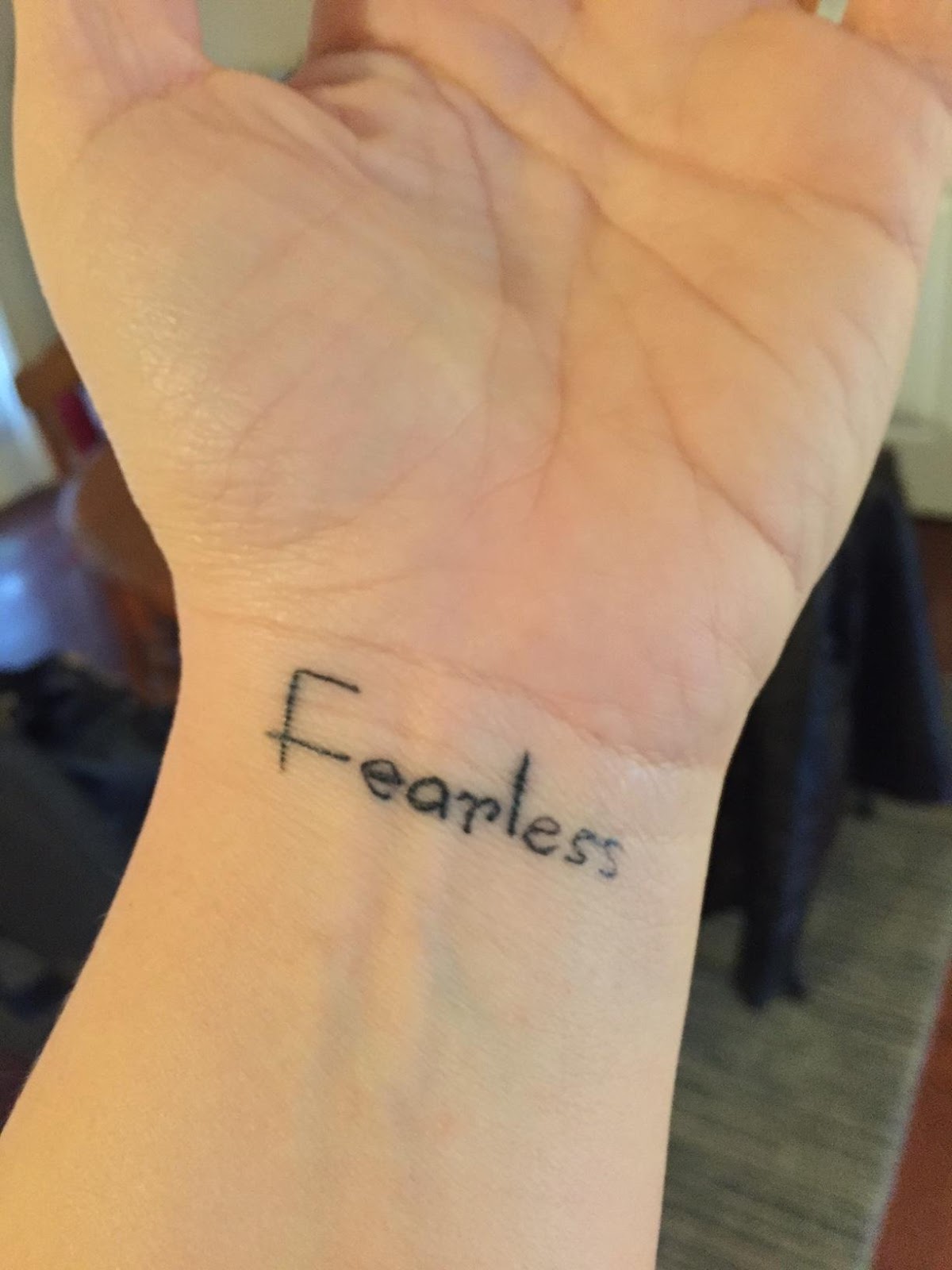
I have been on this Fearless path for about 9 years now (WOW!). I’ve had ups and downs, highs and lows, and have experienced a myriad of emotions on this Fearless ride. Luckily, throughout this process I have made amazing friends and acquired an arsenal of Fearless resources all of which have helped me become a better performer/story teller when on stage.
For each performance previous to this week, I had my inspiration sheet, notes of encouragement on my music, countless phone calls to and amazing advice from Jeff Nelsen (THANK YOU!) and many other friends to get my mind in the “right” place - to get me in the zone. During this past week, I felt the symptoms of nervousness start to invade my body (of course, stemming from my own thoughts) as we sat down to start our first concert. My mind was filled with too many options. What if I can’t get my lips to respond because they are chapped, and I’m dehydrated, and tired from a long day of rehearsal? What if I can’t make it through this performance? What if I can’t get notes to speak? What if I freak out and am out of the zone? I had 95 “What If” options. As I took my first breath of the performance, I looked down at my left wrist and saw FEARLESS emblazoned on my skin.
It was an instant reset. I was immediately calm, focused, and ready to share music/stories not only with the rest of Mirari, but with the audience, as well!
Fearless training has been such an integral part of my life over these past 9 years, that I didn’t need a paragraph explaining what it was, what it entailed or have someone encourage me to do my best to know exactly what I needed to do. Fearless is something I am; it’s in my being (as it is for everyone). Fearlessness comes from within, not outside, myself. Just like you learn from your teachers, process what they say, put it into your own words, share it with others, and find out later, it is then your information to share and own, this experience was the same. Everything I need, I currently possess. Being Fearless isn’t about not experiencing Fear (nerves, shaky hands, unsteady breath, etc.) it’s about letting your Brave be the loudest voice you hear at that moment.
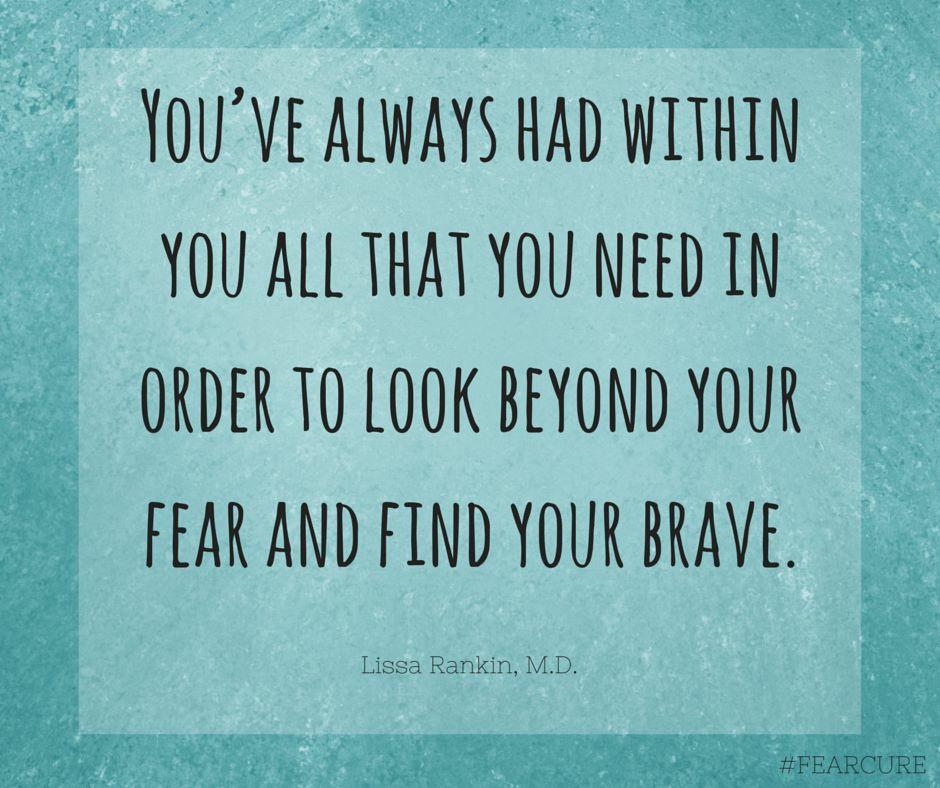
What would happen if we all let our Brave be the loudest voice in our heads? What would your world look like if you shared your Brave rather than hiding your Fear?
This week, I found my Brave. Not only did I find it, but I found the key to it, too! This key is now etched on my left wrist. I’ll never lose it, never have to second guess it. It is, and always has been, within me.
I have one option now, to BE FEARLESS. ☺
Jessie
Jessie
Thursday, January 1, 2015
The Only Resolution You Need to Make in 2015
Happy New Year!
Hopefully you had an enjoyable ringing in of the new year with friends and/or family. Maybe you went to dinner or maybe out for drinks, maybe you played games with your family, or watched the ball drop in Times Square. Maybe you just watched a movie and went to bed before midnight. It was your choice and I am sure you chose wisely. Now we’re on to one of the least successful times of the year. Yup, New Year’s resolution season. We all decide to do something that we’re going to do for the next two weeks and if it doesn’t stick, oh well. There’s always next year.
Building New Habits
I was having a conversation the other day with some friends about building new habits. Though the conversation was completely unrelated to music, I found myself (as I often do) applying some of our conversation to music. We talked about what was required to build a new habit and how long it takes. Different numbers were thrown around, so I decided to do some research. For many years, exercise gurus, dieticians, doctors, and educators sold the notion that you could create a new habit in 21 days. There have been plenty of articles about that, so I’ll just say that the origin of this magic number actually claims it takes a minimum of 21 days depending on the person and the habit. Here's some interesting and much more recent information on developing habits which claims it takes anywhere from 18-254 days to change a behavior.
So, let’s apply this to breathing while playing a wind instrument. Back in 6th grade, my band director told me to take a big breath and blow. Not realizing that I was basically tensing up my entire body on both the inhalation and the exhalation, that’s how I played for three years until I started taking private lessons, then went to college, etc. The point is that I breathe differently now than I did as a sixth grader and it was not a magical 21-day fix.
I use the words “free, easy, relaxed” when I describe the breath I want to take and I am fairly successful breathing that way in my practice. However, I struggle some days when my body or my mind is tired and I find myself taking less than ideal breaths. So, I must always choose to breathe the way that I know will help me sound best, no matter how difficult or easy the decision is that day.
Test Your Product
So far, I’ve only been talking about my practice sessions, so now let’s take into account the times that I am in various settings with different levels of stress or pressure. Should I breathe differently? No. Do I? Sometimes. I know that I did for a long time and there are still situations where I have to remind myself to be free, easy, and relaxed. When I was in orchestra or brass band or playing as a soloist, I’d be more nervous, and the first thing to go was my breathing. When your breathing goes, you use more muscle. When you actively use too much muscle, fatigue sets in much faster. When fatigue sets in, your brain starts to focus on how tired you are instead of on the music. I needed more opportunities to be in a pressure situation and be able to teach myself how to breathe, think, and relax in that setting. Thank you, Mirari! I perform way more now than I have in the past few years and I plan on keeping it that way.
There is a reason we stress to our students that everyone has to perform for people. You aren’t just getting another performance under your belt, you are teaching yourself how to behave when you are performing. It gives you a chance to get worked up but still breathe and play in the same way you do in your practice. How many times have you heard someone sound amazing in their warm-up and then like a completely different player when they perform? It’s because they are not testing their product. Can you imagine if your job was to build a boat for someone and you never tested to see if it would float before you gave it to the customer? You’ve got to see if it can withstand heat, cold, crashing waves, etc. Can you say “lawsuit”?
I was fortunate to have Krista Jobson (flute, UT-PA) as a friend while earning my doctorate in Kansas City. I remember having a dress rehearsal for my lecture recital and Krista came to watch because she couldn’t make it to the actual recital (what a kind choice she made to support me, right?). My lecture recital was on unaccompanied trumpet pieces and I was playing some of the most technically challenging music I had ever attempted in my life. Having just one person whose opinion I valued made me ridiculously nervous. I had a pretty big breakdown on the first movement of Henze’s Sonatina. I asked if I could just have some time to work a few things out and she said, “sure, should I leave?” I said, “no, I need to do this while you are here.” She patiently waited as I refocused my brain and got back to playing the trumpet the way that I can. I played again and it was exponentially better than the first time, though it made me wish I had done that months prior. Live and learn. And I have not forgotten that lesson. I play for people as much as I possibly can.
Choose to Choose
One of the important words in the aforementioned study is the word “daily.” Someone in the study decided they wanted to drink a bottle of water with lunch. That means every time they ate lunch they drank a bottle of water. There was no lunch without a bottle of water. Do we really breathe the way we need to every single time we play our instrument? If we don’t, how can we expect that it will ever be a default behavior? That is not to say that if we forget once or twice, we’re screwed, and we’ll never be able to do it, but if we spend more time breathing the way we did in high school than the way we know we should, how will we ever get there?
My thought is that we won’t ever get there. We have a choice to make every time we pick up our instruments. We are choosing to breathe well, choosing to create the best possible tone, and choosing exactly how we want every note and phrase to sound. If we focus on consistently choosing what is best, a very strange thing happens after a while (yes, my ambiguity is intentional)--you get to the point where you can’t play something incorrectly unless you really try.
This new year, I have a new outlook. I believe that we would be more successful affecting change by focusing on the process of creating the habit than on the end result. You know, “oh, I changed my life in three weeks! I am a new person.” That rarely works. Instead, commit yourself everyday to making a choice, and then choosing what is best for you will become your habit.
Cheers and here’s to good choices in 2015!
Matt
Subscribe to:
Posts (Atom)