Showing posts with label Quintet. Show all posts

Thursday, January 18, 2018

Auditioning for Music Schools: Tips from the Other Side of the Room

It’s early January, so for me, that means another season of listening to college auditions. Few things provoke more anxiety in young musicians than the prospect of only having fifteen minutes to (supposedly) secure your future. So from the perspective of someone who’s listened to a lot of auditions over the past decade, here are a few suggestions to help in your preparations:

1. First Impressions Matter. I’m going to give away a secret here. The vast majority of the time, I can make pretty accurate evaluations about a student’s musical abilities within the first ten seconds of hearing them play. Those ten seconds tell me if you have a good sound, musicality, if you can play in time and in tune, and what your major strengths and weaknesses are. The rest of the audition serves to either confirm or contradict those initial impressions, but the truth is that most of the time, my initial observations prove accurate.

Here’s the good news: You can practice for this! How many times have you started the first ten seconds of each of your pieces? It’s very easy—you could do it twenty times a day in the practice room and in front of teachers/colleagues/random people. Practice these initial impressions until they become so automatic that you can start your pieces in your sleep.

If you want to know how your initial impressions come across to others, record yourself. Listen back immediately and ask the following questions:
  • How does it sound? Is my tone full, clear, and resonant? Listen to your most favorite players and ask “how is their sound different from mine?” 
  • Is it musical? Would someone (not your parents!) pay money to hear you play this? Someone that doesn’t know your instrument or the piece? Again, listen to your favorite players and ask “what are they doing differently from me?” 
  • Is it in tune? Put on a tuner or drone pitch and check for reference. 
  • Is it in time? Put on a metronome and see where you rush or drag. 
2. Sound and Musicianship Are Your Primary Goals. Remember that you’re auditioning to study music—that automatically implies that you have a lot of growth and development ahead of you. I’m not looking for fully-formed prodigies in my studio. If you’re that good coming out of high school, you should be auditioning for jobs, not college! So I’m listening for potential as much as polish.

Two of the things that often take the longest to develop in young musicians are also the two things which will define you as a player throughout your career: sound and musicianship. These are way, way more important than being able to play the highest, the fastest, or the loudest. Make sure in your audition preparations that you are focusing on always playing with a great sound and always playing with compelling musicality.

The best way to gain musicianship is to listen to great musicians. Do you have a favorite player? Have you listened to her or him play many times over? Can you hear their sound in your head? If not, you’re not listening enough. Remember to listen to players on other instruments than your own. This can be a part of your practicing—listen for a few minutes in between playing passages. It gives you a chop break and helps to reinforce great concepts of sound or musicianship.

Finally, one of the best ways to work on these concepts is by playing fundamentals. Fundamental practice should probably be at least 50% of your practice time, right up to the day of your audition. If you need help on developing a great fundamental routine and figuring out how to practice i, ask your teacher. Or contact me—I’m always happy to give suggestions!

3. Select Repertoire That Makes You Sound Your Best. Really hard music played in a mediocre fashion is not nearly as impressive as anything else played well. Don’t try and game the audition process by picking music that you are “supposed to play” or that the panel “wants to hear”. Pick music that highlights your strengths and minimizes your weaknesses (of course, you are constantly working to shore up weak areas in your practice, but you don’t have to spotlight them in an audition). Make sure that you are always asking yourself “does this make me sound my best?”

Here’s an example of something I hear a lot. The Hindemith Trumpet Sonata looks easy on the surface—it’s not fast, the notes aren’t difficult, and there aren’t that many of them. But that piece requires tremendous endurance, breath control, and musicianship, traits which many young musicians haven’t yet developed. Virtually every year, someone chooses this piece to play in an audition for me. Most of the time, they don’t have the chops to make it through. Pick your repertoire carefully!

4. Finally, Ace The Intangibles. Going back to this idea that college teachers are looking for potential over polish, do everything that you can to show in your audition that you are the kind of student that will make their studio better. Here is a partial list of qualities that I love to see in my incoming students. The best students are:
  • Curious
  • Determined
  • Hungry
  • Team players
  • Confident without being cocky
  • Thoughtful
  • Kind towards others
  • Interesting
  • Organized
  • On time
  • Enthusiastic
Without going overboard (or putting on a false persona), how many of these qualities can you show during an audition? There will undoubtedly be time to talk with the panel—this is your chance to show that you are the kind of student that they definitely don’t want to pass on. One further thing with this: you will certainly have an opportunity to ask questions about the program during your audition. Just like in a job interview, have a couple questions in mind to ask. Make them well thought-out, intellectual questions that you can’t find the answers to just by going on the university’s website!


Hopefully this is just a bit of useful insight into the other side of the university audition process. It’s not as scary as it might initially seem, and do remember that you are evaluating the school as well. So test out these tips in your preparations, try to enjoy the process a little bit, and as always, remember to breathe!
 

Alex Noppe 
Trumpet Professor, University of Wisconsin
miraribrass@gmail.com

Sunday, October 2, 2016

What Speaks to You?

What Speaks to You?

It’s the beginning of the school year, and I was going to talk about setting goals or organizing
your schedule, but some crazy things have happened in Baton Rouge this summer. You have
probably heard or read about the shooting deaths of both Alton Sterling and law enforcement
officers and the historic flooding that wiped out over one hundred thousand homes.

Thankfully, I was not involved or even near any of the shootings and my house escaped any
damage from the floods. But I know people, and know people who know people, who have been
affected by these events. Having lent a hand to a couple of households damaged by the floods
and volunteering at church, I can tell you some really amazing stories about the people of
Louisiana. I was floored by how many people came from surrounding areas, and New Orleans
especially, because they knew people needed help. My eyes get watery just typing this. It’s
beautiful to hear people say “y’all had our back during Katrina and now we’ve got yours.” There
is nothing like a natural disaster to bring out the hero in all of us.

No matter how hard a day I might have had, perhaps even in spite of it, when I see people being
selfless and coming together it helps remind me that there is so much beauty in the world. That
is what speaks to me. That is what moves me. That is why I am drawn to music. All kinds of
music. In order for music to even happen, people have to come together, support each other,
and work toward a common goal. It’s one of the reasons we grow such strong bonds with other
musicians.

My students and friends can probably tell you that I think there are two things that can save the
world: better education and music (or visual art, literature, film). It is so amazing to me to be an
educator and watch kids from every race, nationality, and economic background get together
and make music. It doesn’t matter if you are rich or poor or what color you are once you have an
instrument and a common goal. You want people to enjoy what you’re doing, to be entertained
and, most importantly, to feel human. Everything else goes away.

I know plenty of people who are not moved by music and that is okay. It usually makes me want
to play my favorite recordings for them and see if I can get them to feel what I feel, but it’s okay
if they don’t. They will usually say, “but I really love cooking/reading/film/art.” Great! If you don’t
know or feel like you don’t have anything, find it. It is what keeps us going and helps us to
bounce back from failures or the horrible and depressing things that happen around us. It’s what
helps us see the light and the beauty in the world around us and to not give up hope. So, before
you get swallowed whole by your undoubtedly busy schedule, find the pieces, memories,
movies, or meals that speak to you and enjoy them. Revel in them until you feel recharged and
ready to tackle tomorrow. Your sanity and your humanity depend on it!

What Speaks to Mirari

Part of what makes Mirari what we are is that we are human and we laugh and cry together and
care about each other. Being in a group where the members are spread across the country is
hard work and it takes so much advance planning and individual sacrifice. We can sometimes
get bogged down in administrative or financial tedium and by the sheer act of attempting to unify
five individual opinions and ideas. Then we play together and everyone remembers why we do
this. Making music is what allows the individuals in the group to come together and share
something truly special. I think I am safe in saying that making music together with people you
care about, for people you care about, is what speaks to Mirari.

Beyond playing together, we share our passions and ideas with each other. For some of us it’s
running or yoga and for others it’s musicals and singing at the top of our lungs in the car. Each
tour we are all very excited to share new music that we have stumbled across, and our group’s
travel playlist changes ever so slightly each time we’re in the van together. I’d like to make you
part of it and show you the video below. Some will say it’s cheesy, and perhaps that’s true, but
right now this is something that speaks to me and I guarantee you I will make everyone listen to
it on our next tour. Good singing, great production, an interesting arrangement, and, most
importantly for me, a beautiful message.

Maybe this will speak to you too? If not, good luck on your search!

https://www.youtube.com/watch?v=oXreNYWtjPQ

Sunday, September 4, 2016

10 Tips for Success [in your First Year] in Music School

Whether it's your first year or your fifth year, these tips from trumpeter Alex Noppe will set you up for a great year of exploration, learning, and growth!

1. Go to class and do your homework 
Most students that fail classes do so because they don’t show up and they don’t turn in assignments. Too many of those end up paying for 5th and 6th years of college! Don’t let one missed class or assignment spiral into many more.

2. Use your professors for help 
That’s why they’re here – they like teaching and helping students!
Never be afraid to ask questions, whether it’s about class material or anything else.

3. Use your fellow students for help
As much time as you spend around the faculty, you’ll spend way more around your peers. Learn from them. Ask questions. Practice with them. Most older student love to help out freshmen with advice and ideas.

4. Practice. 
A lot. Every day! This is your job right now – to become great at your craft. Nothing else is nearly as important. You don’t get to take weekends and holiday breaks off from practicing any more. The best thing you can do is actually put your practice times in your calendar, and plan on multiple shorter sessions throughout the day. Mental fatigue leads to poor practice and very few people can remain mentally focused on one thing for hours at a time.

5. Use the little breaks in your schedule
Most music majors have tons of shorter classes and rehearsals, often with 20-40 minute breaks between them. You’d be amazed at how much you can accomplish in those short breaks, whether it’s a hyper-focused practice session, theory homework, or meals.

6. Be a good person to everyone around you 
This one is really important. Music school isn’t a competition – it’s collaborative and we all can get better together. Your reputation building begins right now, and many of the connections that you make while in college will be critical to your professional life down the road. Don’t gossip. Don’t cut people down. Assume that anything you say about somebody else will probably get back to them. Both positivity and negativity are extremely contagious, but positive people have happier lives!

7. Try out new things 
One of the best things about college is the incredible variety of opportunities and experiences that you will encounter. This is the best time to explore new fields, take new classes, learn new skills, and do things that will challenge you. I can guarantee that you will leave college a different person than when you started, and you never know what unexpected opportunity might set up you on the path towards the rest of your life.

8. Be smart about money management 
Remember that you have the rest of your life to work a job. This might be your only chance to be a college student. Save money on the things that don’t matter so much (fancy coffee, expensive cars, the newest cell phone) so that you have it for the stuff that does (extra lessons, a study abroad trip, high quality instruments). Small amounts of student loans are probably worth it if it means that you don’t have to spend your precious practicing/homework time working a minimum wage job.

9. Be healthy
Go outside. Drink more water and fewer energy drinks. Exercise. Don’t eat Taco Bell for every meal. Try to find some time to take care of yourself.

10. Remember that your worth as a person is not measured by your music 
In music school, you’ll experience the highest of highs and the lowest of lows, sometimes within the same 5 minutes! You’ll have successes and failures, but you don’t have to define yourself by either. Every audition or performance is only representative of just your music making at one specific
snapshot in time, not a value judgment of you personally.

As music majors, you get a tremendous opportunity to spend a few years (or your entire life) doing
something that is deeply meaningful to you and those around you, and making our society a better place to live in. Enjoy it – it’s going to be an exciting ride and tons of fun. Have a GREAT year!!

Thursday, June 4, 2015

Stay the Course

10,000 hours. That’s how long “they" say you need to work at something to become a master. I have been practicing for over 15,000 and I don’t feel like I am a master. Maybe I should quit? Hahaha, no way.


If you have read my previous two posts, you have noticed a trend (kudos for being able to recognize a trend over 11 months). I am constantly thinking about how we as musicians and humans improve. To me, this is of the utmost importance. Setting and achieving goals is great and totally necessary but what happens when you achieve those goals? Where do you go? What if you only have long term goals and you are finding them impossible to reach?


It’s all about the journey


I recently read an article in an airline magazine about a guy who is putting the 10,000 hours theory (please know that that is all that it is) to the test. He had never played golf and decided he wanted to master the sport in 10,000 hours. His plan was 6 hours per day, 6 days per week. I hate to disappoint you but, at the time of the article he was only through 5,700 hours so we probably won’t know the outcome for another few years. For him, 6 years has turned into 8 years. But I digress! Or do I?


There was a great point in this article and that was that the subject of this experiment will never view himself as a failure because this journey has been transformative. His family and friends agree. He ran into some challenges that got in the way of his project and instead of trying to become a master of golf, his new mission was simply to finish the project. This is the point upon which I would like to focus.


Let’s forget the fact that he started as a beginner and a day after this interview took place he shot a 74 on a pro-level course (most courses have a par between 70 and 72)! Let’s focus on the fact that in trying to get to 10,000 hours and mastery of something, his biggest challenge is staying the course even when 6 years turns to 8 which may even turn into 10. This happens to all of us to some degree, I believe.


Wha, what happened?!?


It is easy to be into something when the learning curve is steep and we are quickly getting tangibly better. But at some point we reach a level where the change isn’t so obvious and the curve has all but leveled off. Our choice when we reach that level (or imagined plateau) has a huge impact on our future.


The process becomes tedious, emotionally draining, and downright frustrating. The cool thing is that all of that happens because we are better. I use the phrase, “I had my ears opened,” when I talk about my time in grad school. What used to be good isn’t good enough anymore.


Push record AND play (not at the same time though, unless you’re using a tape player…)


This is why I love technology. Recording yourself is easier than ever and it can help give perspective. I often hear people say, “I used to be able to do this much better, didn’t I?” Thanks to modern technology, you can be your very own fact-checker. Chances are, you are wrong. IF you happen to be right, then you need to reexamine how you are practicing.


I record almost everything I do. But even more than that, I record myself playing standard solos, excerpts, or etudes and, yes, I actually do listen to them. Many people skip this step which completely defeats the purpose of recording in the first place. Before I even go back to listening, most of the time my thought after I play something is, “huh, it was never that easy before.” That is an awesome feeling and it helps let  me know that I am doing the right thing. Also, when I am going through a rough patch, it is good to go back and listen to recordings and remind myself that I am a good trumpet player.


I do the same thing with Mirari recordings. We often perform pieces for more than one tour and so I get to review recordings after each tour and see where I am and what needs work and also recognize that we are creating awesome music. That helps me become a more confident performer. That helps me stay the course even when the going gets tough.


Things to remember (you could try doing them too!)


I can boil this whole post down to a handful of points:
1- Put your time in. Do everything you can today to be better tomorrow.
2- Record yourself often.
3- Listen often and figure out if you’re on the right path.
4- Acknowledge and celebrate progress. If you don’t, you might be on the fast track to burn out.
5- Persevere through the tough times. Just keep moving. Sometimes it may be forward and sometimes it may feel like you’re going backward. The important thing is that you don’t stop moving. Adjust your clock, set more goals, and keep moving.


Best of luck!

Matt

Monday, March 2, 2015

Your Brave

Mirari just had our spring weeklong tour presenting master classes and performing concerts at several universities and colleges in Missouri.  We met, worked with, and got to perform for many smart, engaging, and fantastic performers and teachers!  Obviously, this is one of the amazing perks of this job, but I’m also realizing, the place I find myself most fearful – the horn in my hands performance arena.


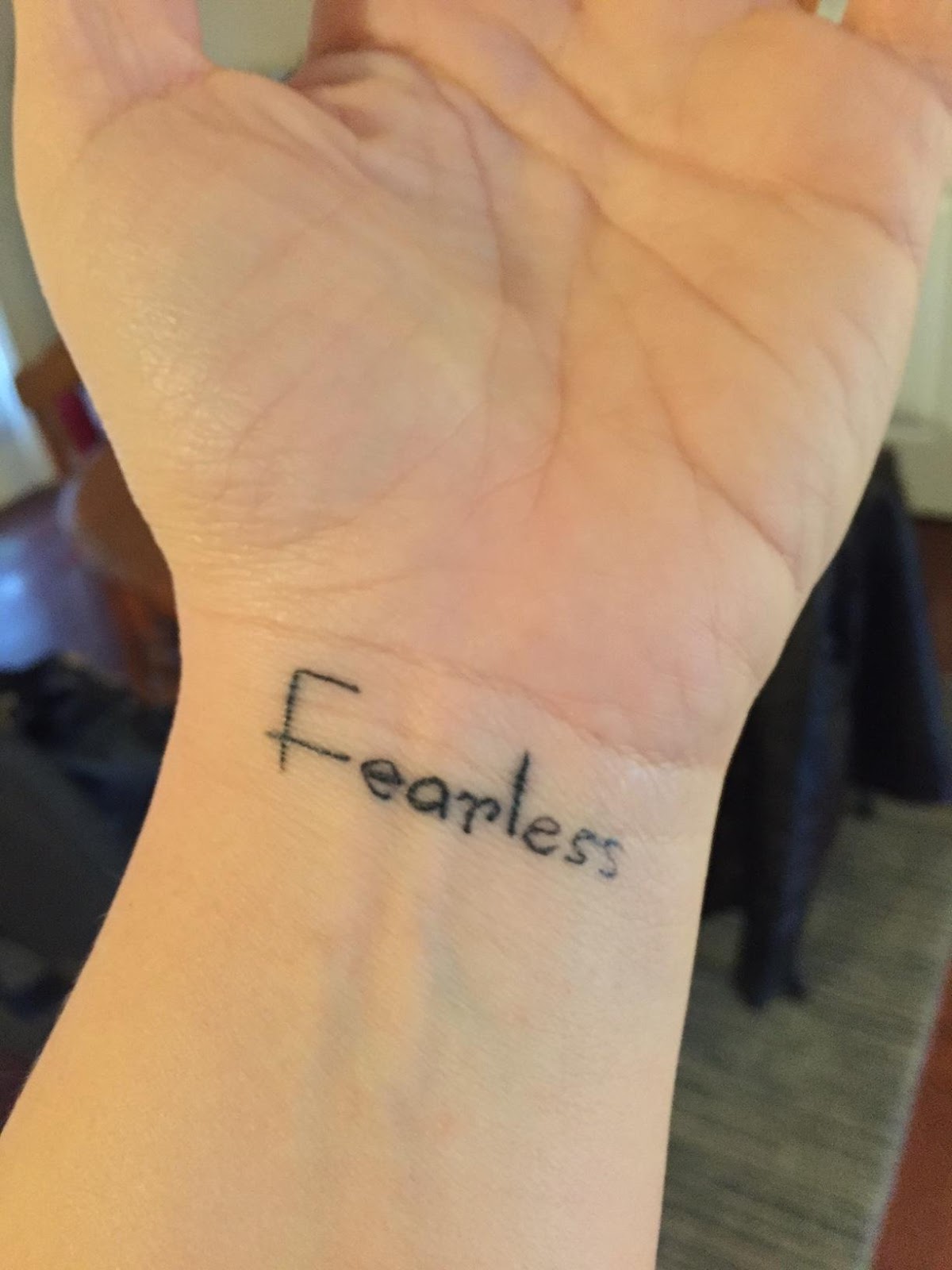
Recently, I got a tattoo.  For those of you who know me, I’ve been thinking about this for several years now.  I finally did it a few weeks ago and it has been a decision that I have not second-guessed and/or regretted, ever (for those of your who know me, this is also a big deal!).


Macintosh HD:Users:jthoman:Desktop:Fearless, Tattoo.jpg
I have been on this Fearless path for about 9 years now (WOW!). I’ve had ups and downs, highs and lows, and have experienced a myriad of emotions on this Fearless ride.  Luckily, throughout this process I have made amazing friends and acquired an arsenal of Fearless resources all of which have helped me become a better performer/story teller when on stage.    


For each performance previous to this week, I had my inspiration sheet, notes of encouragement on my music, countless phone calls to and amazing advice from Jeff Nelsen (THANK YOU!) and many other friends to get my mind in the “right” place - to get me in the zone. During this past week, I felt the symptoms of nervousness start to invade my body (of course, stemming from my own thoughts) as we sat down to start our first concert.  My mind was filled with too many options.  What if I can’t get my lips to respond because they are chapped, and I’m dehydrated, and tired from a long day of rehearsal?  What if I can’t make it through this performance?  What if I can’t get notes to speak?  What if I freak out and am out of the zone?  I had 95 “What If” options. As I took my first breath of the performance, I looked down at my left wrist and saw FEARLESS emblazoned on my skin.  


It was an instant reset.  I was immediately calm, focused, and ready to share music/stories not only with the rest of Mirari, but with the audience, as well!

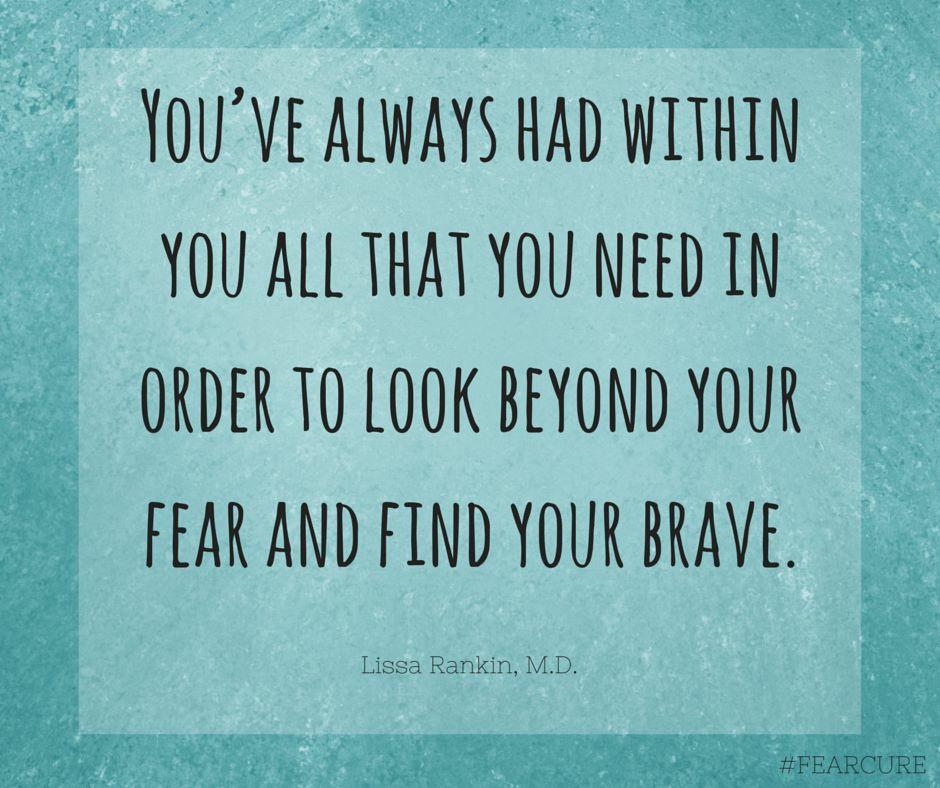
Fearless training has been such an integral part of my life over these past 9 years, that I didn’t need a paragraph explaining what it was, what it entailed or have someone encourage me to do my best to know exactly what I needed to do.  Fearless is something I am; it’s in my being (as it is for everyone).  Fearlessness comes from within, not outside, myself.  Just like you learn from your teachers, process what they say, put it into your own words, share it with others, and find out later, it is then your information to share and own, this experience was the same.  Everything I need, I currently possess.  Being Fearless isn’t about not experiencing Fear (nerves, shaky hands, unsteady breath, etc.) it’s about letting your Brave be the loudest voice you hear at that moment.


Macintosh HD:Users:jthoman:Desktop:Look Beyond Your Fear and Find Your Brave.jpg


What would happen if we all let our Brave be the loudest voice in our heads?  What would your world look like if you shared your Brave rather than hiding your Fear?


This week, I found my Brave.  Not only did I find it, but I found the key to it, too!  This key is now etched on my left wrist.  I’ll never lose it, never have to second guess it.  It is, and always has been, within me.  

I have one option now, to BE FEARLESS.  ☺

Jessie

Monday, February 2, 2015

Eternal Lessons

Today I was practicing a piece for an upcoming recital, and I decided to finally attack “that one little lick.” You know that lick, right? The one that just never goes exactly as you want it to go.
Before I share with you the [not so great] ways that I practiced that lick, let me tell you a little bit about the way I approach new material. When I learn a piece, I tend to have a process that I follow as I prepare for a performance. It’s kind of like peeling an onion; there are lots of layers!
My first broad brushstroke tends to cover learning notes and rhythms. I try to do this as quickly, correctly, and efficiently as possible. If I make a mistake, I stop and fix it before I move on. If I’m not sure if I played the right note, I check it against a piano. There is a lot of singing involved so that I internalize the new material.
Second, I find large phrase direction and shape. There’s more than one right answer in this step, so I tend to try out several ways to turn a phrase before I settle on my favorite. I make a lot of marks in my music so that I can pick up where I left off when I come back to the piece the next day. This step also involves determining where to breathe…and writing it in!
Third, I find smaller nuances that I want to make within each phrase. It’s around this time that I find little technical inconsistencies that I may have missed when I peeled off that first thick layer. And that’s where I found “the lick.”


[See my full list of steps for learning a new piece at the bottom of this article.]


You see, this particular lick is really difficult because the figure goes between eighth notes and triplets, and it has four notes in four different positions, but the positions are really close to each other, and in fact you have to play two different 3rd positions to adjust for tuning and, and, and…
Well, at least that’s what I told myself for the past week or so. That’s probably why I haven’t gotten very far with this lick.
So today, it was time to take care of “that one little lick.” (Don’t get me wrong, I have plenty of other “little licks” throughout my recital program. But today was the day for that one.) What did I do first? The wrong thing: I didn’t make a plan. I just made a goal. My goal was to fix it. I had no idea how I was going to do it because it’s really difficulty lick because the figures goes between eighth notes and triplets, and it has four notes in four different positions, and….
All I had in my mind were the thoughts “this is hard, it doesn’t sound good, I need to fix it.” Somehow, I still fixed it, but only afterwards did I realize that I went about it backwards. My mental approach should have been more planned and more positive! I probably could have saved twenty minutes and some chop fatigue if I had taken a second to think about my approach.
That being said, this is what happened: I played it over and over. The same way. At least forty or fifty times. If I hadn’t made it clear yet, this is what NOT to do!


What was I doing? I was waiting for one of those repetitions to give me the answer. I was waiting for it to sound good so that I could capture that approach and sound, and then replicate that.  I was using the lowest level of problem solving: trial and error. Unfortunately, I was also practicing it incorrectly…over and over.
Nothing changed until something in my brain said “play it longer.” Aha! A style change! Imagine that!
I played it longer, and it definitely helped. Then something in my brain said “direct the phrase to the last note.” Aha! A musical change! Imagine that!
I played it more musically and it was instantly 100% better. You might even say it was fixed. Looking back, I realize that it only took me one creative thought and one repetition carrying out that thought to “fix” my technical problem. I wondered why I had just mindlessly practiced the lick fifty times. Why didn’t I just stop to think for a few seconds?!
And then the echoes of one of my teachers, Carl Lenthe, rattled in my mind. A musical solution to a technical problem. Of course. It makes so much sense. Why didn’t I listen to him more often? No, why didn’t I just do what he said more often?
I practiced the piece for about 45 minutes today, but I took away much more than that. I learned a very valuable lesson, one that I have learned before and forgotten, many times: making music and learning how to play your instrument is not a technical pursuit. Rather, it is a mental pursuit. You have to learn how to learn. You must learn strategies that guide yourself to improve efficiently and mindfully. That is the answer! Yes, we all have technical shortcomings that we would like to improve, but the first step is not finding out which exercise to play. The first step is knowing yourself, making a plan, and teaching yourself how to learn.
If you are an artist and you are trying to really improve, I strongly encourage you to take this approach. Really take a look inside yourself and figure out how you learn. Teach yourself to learn well. Listen to your teacher, because they are giving you the answers all the time. You can only benefit from them if you are ready to learn.


The other lesson that I learned (again) is to just try something different. If a lick isn’t working, you’ve got to attack it from all angles. If you’re not sure what else to do with it musically, start with technical approach variations. Play it slower, faster, lower, higher, louder, softer, change the articulation--anything that will pull you away from playing it the same, boring way that you always play it. There is virtually no benefit of playing something over and over again unless you’re doing it well every time (correct rhythm, notes, intentional musical direction, etc.).


I hope my practicing woes and triumphs will help you bring a new angle to your practice, even if it is to simply incorporate more intentional thought into your precious practice time. We are all busy people, and we owe it to ourselves to get the most out of our practice by planning, learning from our mistakes, and making conscious musical choices every time we pick up the instrument.


How to Learn a New Piece

Sarah

Monday, December 1, 2014

Beyond the Notes and Rhythms

I remember way back in my early days of the tuba, when I had to sit on two phone books to simply reach the mouthpiece.  I had recently joined a youth orchestra and was completely out of my element, in awe of the other young musicians around me.  They could play such fast notes and with such confidence.  At that point those fast notes seemed to equal greater skill, and man did I wish I could do the same.  As the next few years passed I grew….physically I could now reach the mouthpiece with one phonebook.  And now those fast notes didn’t seem to hold the same intrigue or interest.  I wanted more, but I didn’t know what it was.  In high school my teachers and mentors encouraged me to listen.   Listen to as many great musicians as possible.  I listened to tuba players of course, but also other brass players, string players, and most importantly, vocalists.  Singers like Luciano Pavarotti, Bobby McFerrin, Renee Fleming, and later groups like the Wailin’ Jennys, were and are captivating.  But why?  It wasn’t fast notes or stunning technique.  It was something else, something called musicality. 

I desperately wanted my own playing to have this mysterious element, I wanted to captivate people in the same way these amazing musicians were captivating me.  Initially I wondered if it was possible on the tuba, an instrument not generally recognized as emotionally moving, but after hearing other tubists like Pat Sheridan and Roland Szentpali (check them out if you haven’t) I knew this was more than possible.

It wasn’t until my graduate school, working with and listening to outstanding teachers and fellow students that I really began to discover and understand how to achieve this seemingly transcendent goal.  So how does one captivate their listener?  What does it mean to play musically?  And how do we as musicians go about that? 


Musicality Defined

Musicality is communication.  Communicating to the listener, whether it is other performers, a paying audience, or a family member listening to your practice session, what you are saying through your instrument.  This idea is analogous to language.  We take the fundamental basics of words, and string them together into sentences to express something we are thinking or feeling.  In music we take the fundamentals of musical language and express something we are thinking or feeling through our instruments.  Musicality is the connection; how we communicate our music to the listener.


Connecting & Communicating

Intent.  Okay, so we have to communicate and connect with audiences.  How?  To start, consider what the music means to the composer, and then more importantly, to you.  There are two layers, the composers’ intention and connecting those intentions to what’s meaningful to you.  What is the background of the composer?  Of the particular piece?  It’s important to have knowledge of different styles and understand where the composer is coming from, but then be brave enough to put it forth in an exaggerated manner that means something to you.

Imagine.  Finding what a piece means to you can require imagination.  When reading a book, we imagine and give life to the words on the page.  Similarly with music, take what’s on the page as a starting point and give life to the notes and rhythms.  Like a teacher reading a story to a kindergarten class, be the exaggerated story teller of the printed music.  In addition, use your intuition.  How do you intuitively or automatically want to respond to the music?  Compare this to the score and intertwine your intuition and the composers’ ideas together.

Paint a picture, tell a story.  Connect the music with something extra-musical, whether it’s descriptive words, moods, colors, emotions, a painting, or a story.  Better yet, try drawing/painting an actual picture of what the music looks like to you.  Or write a story to go along with the music, create characters, a plot, and action.  Reflecting the music in a personal painting or story will make the music come to life for you, and as a result your audience.

Sing.  All lines must sing on the instrument, so first sing them with your voice.  And really sing!  Notice how you approach phrases, where you breathe, how you emphasize certain moments.  And as you sing, conduct and move.  Feel the musical line, dance to the music and involve your entire body.  Internalize the music in your body and voice and then project that through your instrument. 

Listen.  Listen to other artists you admire, and really listen!  Include those that play your instrument as well as anyone else you admire.  Don’t limit your listening, explore a variety of genres.  Figure out what captivates you about the artist and use that as a platform or starting point.


Always be musical!

No matter what you’re playing, whether a Bach Cello Suite or a jazz ballade, or whom you’re playing with, from an unaccompanied solo to a chamber group, musicality should always be part of our musical message.  From the first reading of a new piece, keep in mind the story you’re telling. 

Get in the habit of having every note you play be a musical one.  Pay attention to the details on the page, see and respond to what the composer wants, exaggerate, give direction to the musical line, and tell a story.  Musicality allows us as performers to communicate and connect with the listener and other musicians.  And for me, this connection is the primary reason I became an artist in the first place.

-Stephanie


Tuesday, September 2, 2014

Distracted? 6 Practicing Tips to Improve Your Focus

Does this conversation sound familiar to you?

Friend: “Hey (your name), how are you?”
You: “Great, and super busy!

I’ve definitely been busy lately. I’ve been busy for the last…10-15 years, really. It took me a while to realize it, but “busy” is my style. I say “yes” to a lot of things, and I am comfortable maintaining seven different agendas. It’s not necessarily good for me, but I’m good at it.

The truth is, we’re all busy. We have so many options in our lives for work and entertainment, there’s no way we could be bored. 

The problem is when my busy-bee mentality gets in the way of my focus, which is something I must have as a musician. I notice my focus wandering especially when I practice. I have so many other things running through my mind that I struggle to quiet my constant train of thought. Then I catch myself writing three emails in the middle of a practice session – and I don’t even know how I got there!

Luckily I realized that I had a problem – no, it did not take an intervention! I started trying out some practicing techniques that would me focus on the task at hand: playing beautiful music.

I’m sharing these with you so that you will benefit from these practice techniques. We’re all different people, so some may work better than others. But one thing is for sure: we’re all busy! So I challenge you to incorporate at least one of these techniques into your practice routine this week. Which leads me to my first tip…


1.  Build a Routine
Wouldn’t it be ridiculous if we slept at different times every day? Like you know you need to get 8 hours, but you worked it into your schedule whenever it happened to fit? That would be crazy! We need our sleep to be consistent and regular. Humans like routine. So, why not use the same approach with your practice? If your daily routine is to wake up, shower, eat breakfast, and warm up, soon it will feel so natural, you won’t remember a time you didn’t warm up first thing in the morning. And then you don’t need to waste any time or energy worrying about when you will get your practice time in.

2. Schedule It
And why stop at the morning? Try scheduling all of your practice sessions. If you’re a person who uses a daily planner or the calendar on your phone, this one is for you. I find that if I write down my practice time in my calendar, I am more likely to stick to the plan and less likely to do something else instead. Here’s an example of my daily schedule on Google Calendar:


      3. Commit
Don’t half-ass your practice session. If you’re not totally in it, step back and evaluate why. I make sure I fully commit by going through all of the important fundamentals in my morning warm up: 8 minutes of Breathing Gym, 2 minutes of buzzing, long tones, slow slurs, fast slurs, articulation, high range, low range, etc. Sometimes I catch myself wanting to skip the breathing exercises and then I think, “What’s the point? You’re too good to spend time doing this halfway. Either commit now or do something else.” If you know a method to achieve superior practice and performance, why wouldn’t you follow it every time?

      4. Make 1 Goal
So if you’re having trouble committing to a practice session, design a goal for yourself. There are three rules for this goal:

Your goal must be:
·      Specific
·      Measurable
·      Achievable

This is especially good if you have less than 30 minutes to practice. Here's an example of a good goal:

“In this practice session I will practice my memorization of Bolero. I will divide the excerpt into phrases and play each phrase once with music and once without. I will repeat this process until 30 minutes have passed.”  

My goal is specific; it outlines the exact process that I will use.
My goal is measurable; at the end of 30 minutes, I can report that I did it.
My goal is achievable; notice it didn’t say that I would memorize Bolero, because I don’t necessarily know if I can do that in 30 minutes. I do know that I can play phrases back and forth, with and without music. I set an achievable goal that would take me closer to memorization. I am practicing my memorization in small chunks so that it is more likely it will be memorized at the end of the session.

Not only will your goal direct your focus, but you’ll have the added bonus of feeling accomplished at the end of your practice session. And who wouldn’t want that?!

      5. 10x10
This is for those mornings when I have to get some work done on the computer, but I also have to practice. I set the timer on my phone to 10 minutes, repeating. And then I go! For the first ten minutes, I play my trombone. When the timer rings, I work on my computer. Rinse and repeat. Once an hour, take a ten minute chunk to go outside and run around in the sun. Then get back to it. This technique works for 1-2 hour increments. It helps keep me focused because I have a sense of urgency in everything I do.

      6. Metronome ON
Still getting distracted? Take out your loudest metronome, turn it on, turn the volume all the way up, and then don’t turn it off. Trust me, it’s really annoying to have a loud click in your ear while you’re trying to check Facebook. It’s a good reminder to get your head back where it should be: in the music.

-Sarah